
I agree to and consent to receive news, updates, and other communications by way of commercial electronic messages (including email) from New Break Resources Ltd. I understand I may withdraw consent at any time by clicking the unsubscribe link contained in all emails from New Break Resources Ltd.
New Break Resources Makes New Gold Discovery in Ontario’s Timmins Camp
February 2, 2026
Click here to read the article on Resource World website.
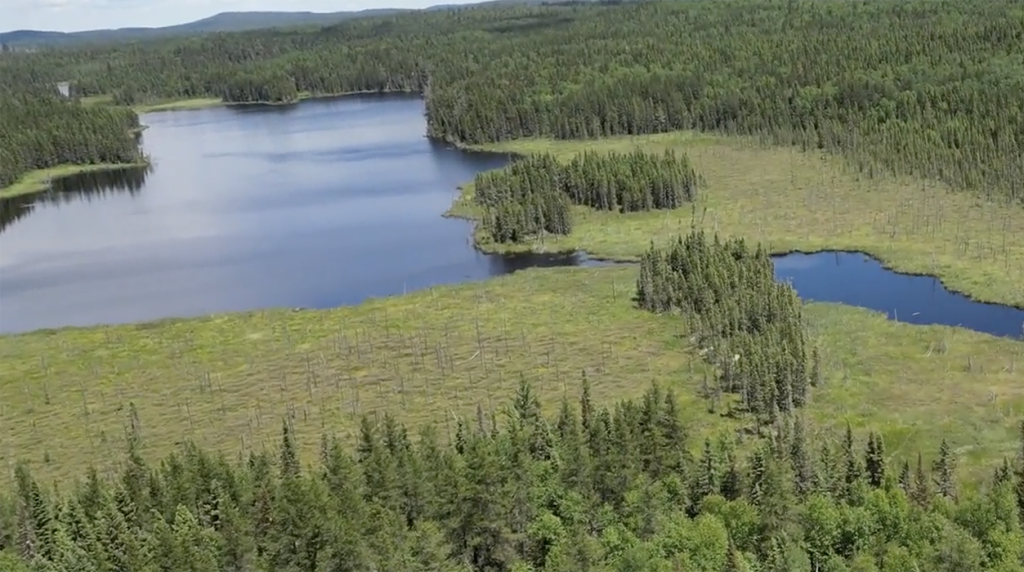
New Break Resources Ltd. [NBRK-CSE] offers investors a window into early-stage high-risk, high-reward exploration in one of the world’s most established gold mining camps in northeastern Ontario.
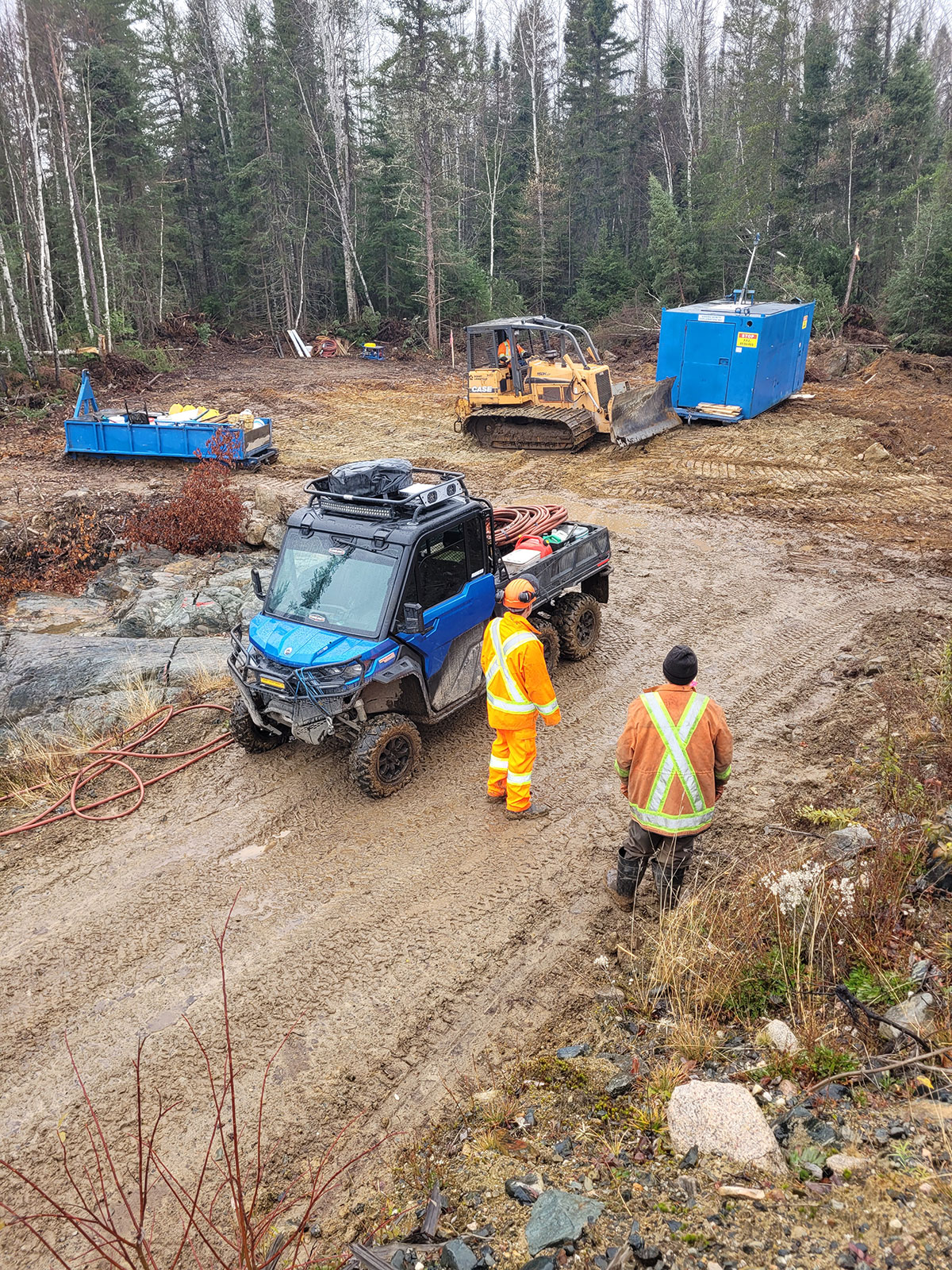
Led by a highly experienced team of professionals, New Break is exploring the Moray gold project which is located 49 kilometres southeast of Timmins, Ontario and 32 kilometres northwest of the Young-Davidson gold mine, operated by Alamos Gold Inc. [AGI-TSX, NYSE].
It is an area where new deposits and new sources of ore are much sought after by a number of operators in the region. The hope is that if New Break can expand the newly discovery Zavitz gold zone, and find other gold zones at Moray, it will attract the attention of major players in the Timmins gold camp.
The strategy is led by New Break’s management team of Michael Farrant and Bill Love. Bill serves as CEO and as a 35-year veteran of the mineral exploration sector, leads the exploration efforts. He was part of the discovery team that uncovered the world class Hemlo [Ontario] gold deposit.
Michael serves as New Break’s President and handles all corporate matters including the CFO role. His 29 years in the gold mining sector began in 1996 as Corporate Controller with Barrick Mining Corp. [ABX-TSX, B-NYSE] before joining Kinross Gold Corporation [K-TSX, KGC-NYSE] as Operations Controller and then as Treasurer. He has founded and sold multiple mining ventures including serving as a President, CEO and CFO along the way.
On the technical side, New Break is being advised by Phillip Walford, the founder and former President and CEO of Marathon Gold Corp., a company that advanced the Valentine gold project in Newfoundland and Labrador, culminating in the acquisition of Marathon by Calibre Mining Corp. [CXB-TSXV, CXBMF-OTC] in January 2024 for $345 million.
Moray is situated in the fabled Abitibi greenstone belt of northeastern Ontario. It is accessible by highway and all-weather gravel logging roads south from Timmins, or Hwy. 566 west from the town of Matachewan and is situated within trucking distance of multiple producing mines and mills. The property covers approximately 23,058 hectares of contiguous mineral claims, along with an additional 4,196 hectares of nearby mineral claims.
“Everything is accessible by road and we can explore year-round,’’ said Farrant during an interview with Resource World.
In July and August 2025, New Break completed a 1,502-metre, six-hole maiden drilling program, which has resulted in a significant gold discovery known as the Zavitz zone.
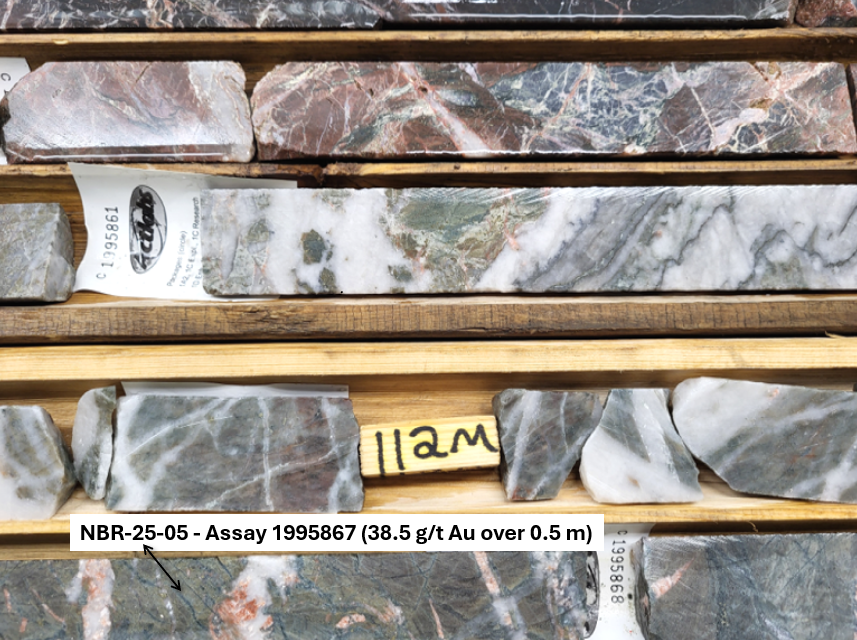
In a news release on September 17, 2025, New Break announced assay results, with highlights including hole NBR-25-05, which returned 4.11 grams per tonne gold (“g/t Au”) over 31.3 metres, part of a wider intersection of 3.17 g/t Au over 43.0 metres from 72.0 to 115.0 metres.
Hole NBR-25-04 returned 1.04 g/t Au over 86.7 metres from 100.3 to 187.0 metres, including 3.35 g/t Au over 14.8 metres. “The results from drillholes four and five represent the discovery of a new gold system and the best gold intersections ever returned at the Moray gold project,’’ said Love.
That caused the share price to double in value from 16.5 cents on September 16, 2025 to close at 32 cents on the announcement, welcome news for the company’s major shareholders, including Medipac Travel Insurance owner Ross Quigley and his wife Patricia, who own 22.9% of New Break.
The share value has since slipped back to 27.5 cents (January 30, 2026), leaving New Break with a market cap of $24.8 million, based on 90.232 million shares outstanding.
Drillholes NBR-25-04 and NBR-25-05 were drilled to test the gold bearing shear vein discovered by New Break three years earlier in Trench 12, where New Break reported an assay of 70.60 g/t Au from a grab sample taken from the south end of what is now the Zavitz zone.
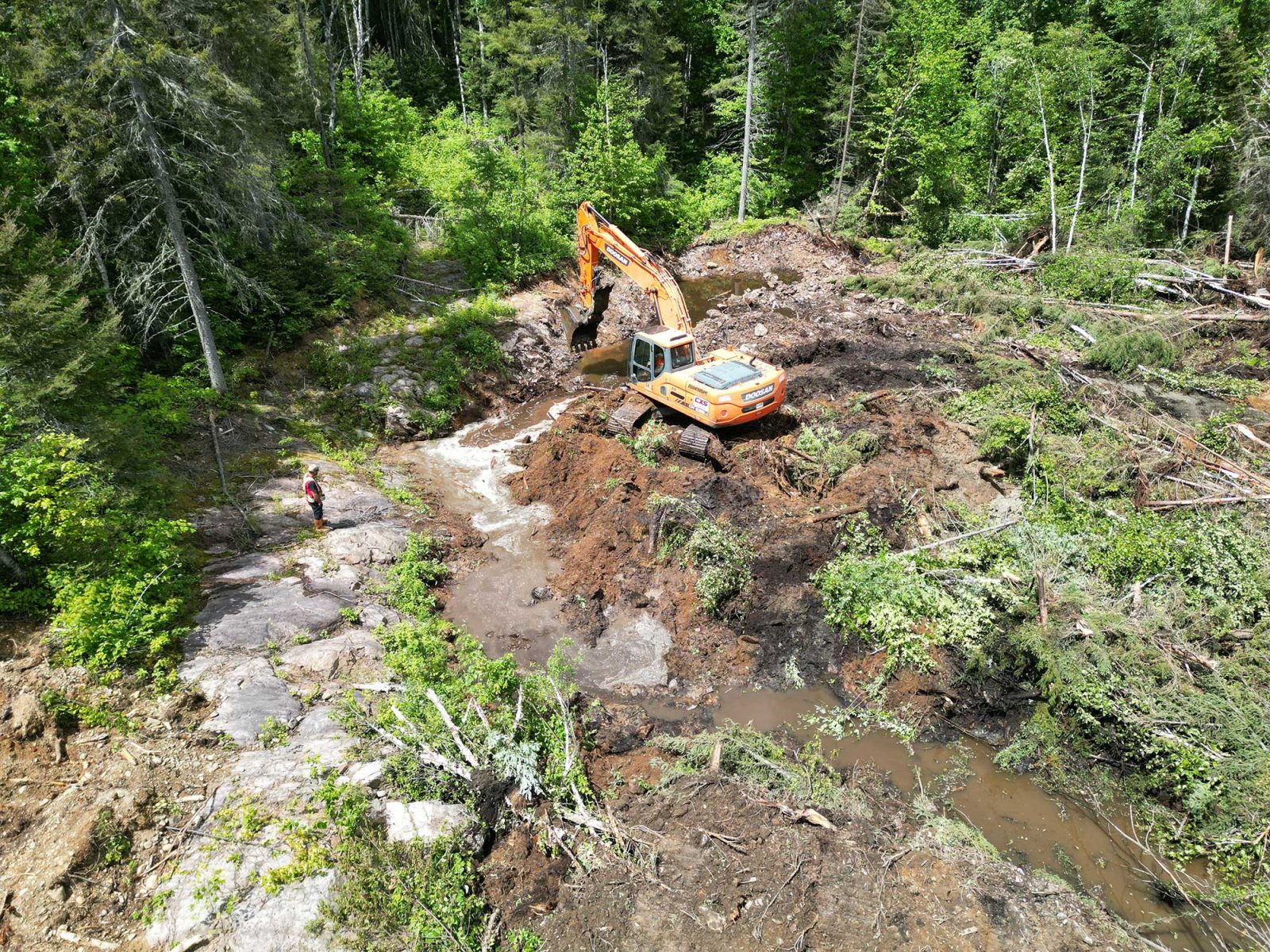
“While historical drilling indicates that gold mineralization within the Fiset syenite intrusion at Moray may share similar characteristics to the syenite hosted Young-Davidson gold deposit, New Break believes that sulfide mineralization within the Zavitz zone and below Trench 12, appears to have been remobilized and partitioned into the hematized mafic volcanics bounding the west flank of the Fiset intrusion,’’ said Love.
“The syenite intrusive at Moray is interpreted to be three times the size of the intrusive at Young-Davidson by area, where little to no drilling has been carried out along the 3.7-kilometre strike length of the western contact,” Love said.
The Young-Davidson gold mine was first discovered in 1916. It produced one million ounces of gold from 1934 to 1957 from underground and open pit development. Commercial production resumed in 2012. Today, Young-Davidson is operated by Alamos Gold and has produced 899,700 ounces of gold from 2021 to 2025, including 153,400 this past year.
“They have an 8,000 tonne per day mill and are looking to expand to 12,000 tonnes per day. So they are looking for satellite deposits,’’ Farrant said. “If we can find more gold and outline a resource, Alamos might be in contact with us,’’ he said. Still, Farrant is quick to point out that it’s “early days,’’ in the exploration process.
On December 17, 2025, New Break released results from another six drillholes, with highlights including NBR-25-09, which returned 1.57 g/t Au over 70.7 metres from 95.8 to 166.5 metres and NBR-25-10, which returned 2.00 g/t Au over 38,0 metres from 68.0 to 106.0 metres. Results from these two holes indicate that the Zavitz zone is significantly broader than previously thought.
Meanwhile, the company has subsequently launched the first round (2,500 metres) of a planned 10,000-metre 2026 drilling program. The aim is to expand known mineralization in the Zavitz zone (north and south-southeast) and test other high priority targets on the property.
New Break is well funded with $2.5 million in the treasury, and under Ontario’s Junior Exploration Program (“OJEP”) is awaiting a reimbursement of $200,000 against the cost of the July-August 2025 drilling program. This would bring the total non-dilutive reimbursement of Moray exploration expenditures received under OJEP from 2022 to 2025 to $836,224.
It is worth noting that shareholders also remain leveraged to exploration success in Nunavut’s Kivalliq region, via New Break’s 20% carried interest in the Sundog gold project, where exploration is currently being funded by Guardian Exploration Inc. [GX-TSXV]. New Break also owns 6.0 million shares of Guardian or 5.44% of the company.